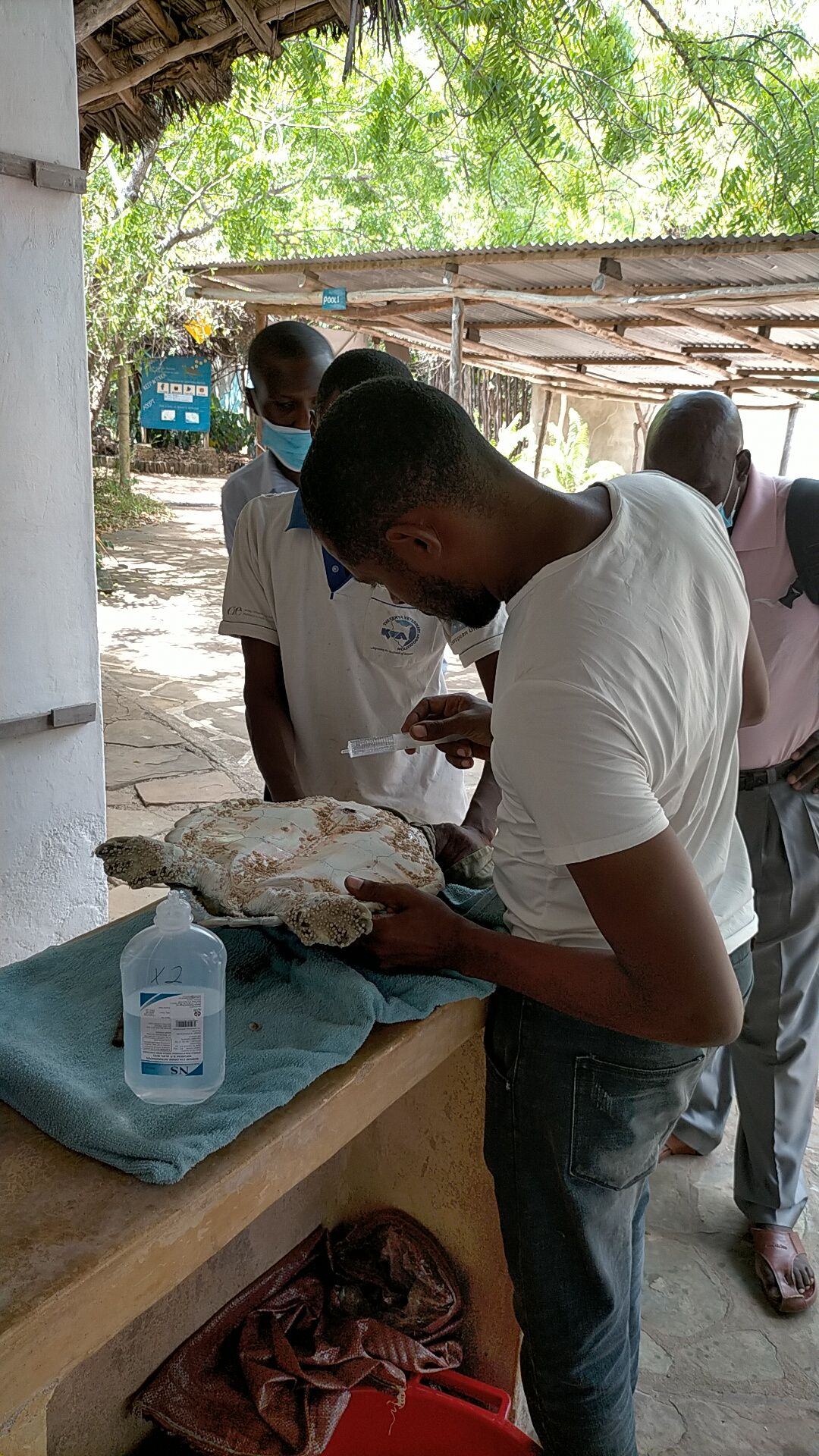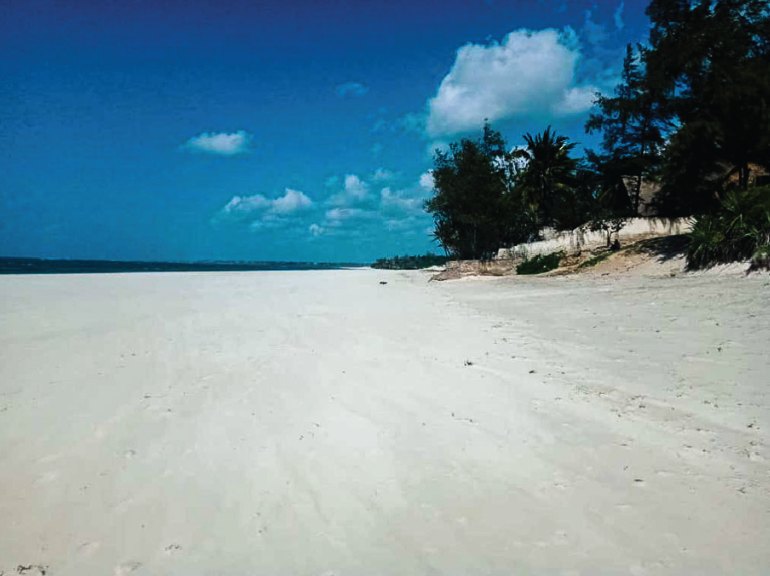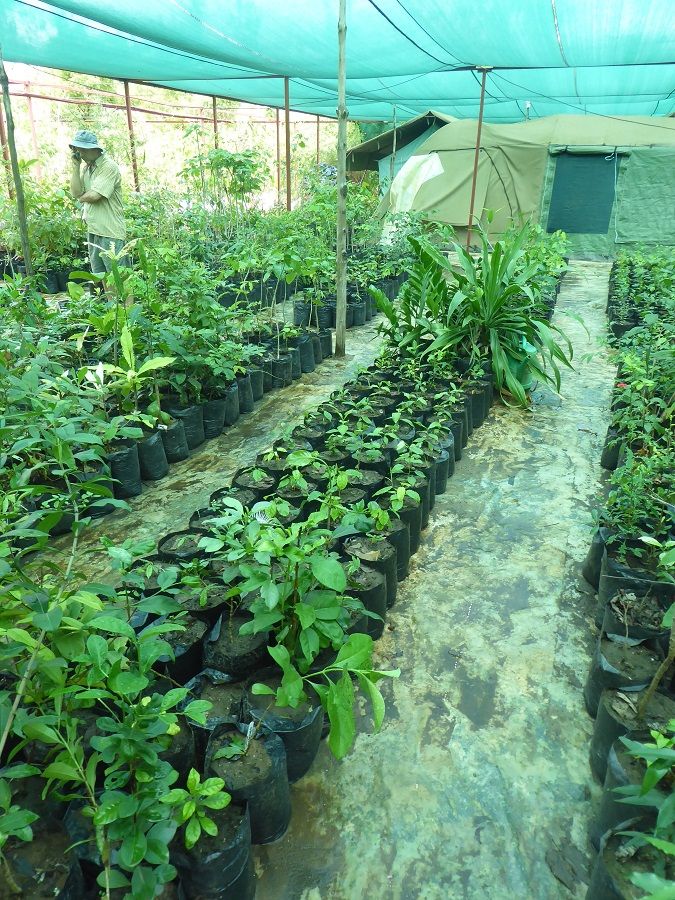

It is always a pleasure visiting the many amazing nongovernmental organisations (NGOs) in Kenya, all working towards a common cause, a better world for not only us but our fellow animals and plants. Not only do these moments provide opportunities to learn, but to build connections and most importantly instills the motivation needed to act!
One such organisation is Oceans Alive, situated in the small town of Vipingo in Kenya. The organisation, although recently established, is made up of a team with over 30 years of experience. The organisation supports the Kuruwitu Conservation and Welfare Community Based Organisation (KCW-CBO), which was founded in 2003 by the same individuals that started Oceans Alive. KCW-CBO is the FIRST Locally Managed Marine Area and community conservation area in the Western Indian Ocean. Seventeen years on, there are nearly 30 of these Locally Managed Marine Areas, most of which were influenced by the efforts of KCW-CBO. These locally managed areas now cover 100km2 of coastline and in 2017, KCW-CBO was awarded the UNDP Equator Prize for excellence in community-initiated sustainable development.
What is a Locally Managed Marine Area and why are they vital for marine conservation?
A Locally Managed Marine Area (LMMA) is when a local community works together to protect and sustainably manage their marine livelihood resources. This can be in collaboration with local landowners, NGOs and/or the local government. An LMMA differs from a Marine Protected Area (MPA), in that LMMAs are distinguished by local ownership, whereas MPAs are often under the management of the government and in many cases, have very limited local input.
LMMAs allow coastal communities to manage their resources, whether this is conserving fisheries or seeking alternative sources of income. There has been a strong shift towards this type of co-management in marine conservation, recognizing the rights of local coastal communities to manage their own resources. This gives communities the opportunity to be active participants in local conservation, in simple terms, ‘giving the power back to the people’ instead of the ‘old ways’ of conservation which often dismissed local involvement and knowledge, favouring a more top-down approach.
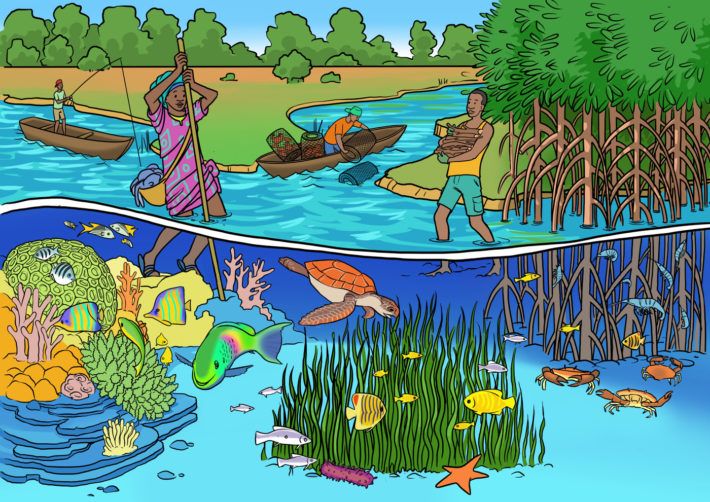
In recent years, Kenya has seen a rapid increase in LMMAs. The first LMMAs was in the 1990s, these being community-managed mangrove boardwalks, which provided protection to mangroves and income through eco-tourism. The first coral reef based LMMA was initiated by KCW-CBO, this has since grown and has shown to be incredibly successful. However, this has not been without its challenges, the biggest challenges with all LMMAs are community participation, engagement and empowerment. These challenges are often influenced by several factors such as trust, access to long term funding and education. LMMAs and similar community-based projects, in my opinion, is the future of conservation and vital for its success and no matter the challenges, local communities should always be active participants in local conservation, not only because it is the right thing to do but also to ensure both success and longevity. Finally, we cannot dismiss the importance of local knowledge, something that cannot be taught in a classroom.
However, these initiatives are often time-consuming and the most challenging. This in turn often ‘scares’ conservationists away, not wanting to take on such projects, knowing the difficulties that lay ahead. Unfortunately, many community-focused initiatives often fail or never really successfully ‘kick-off’. This is what makes the KCW-CBO so unique, having successfully set up several LMMAs along the Kenyan Coast. It is both KWC-CBO and Oceans Alive that have helped make this successful and I was excited to visit both projects to learn firsthand why, unlike so many, they had been so successful in creating so many LMMAs in the area.
Oceans Alive
Before my visit, I had had some contact with the co-founder and director as well as read through their strategic plan, the first thing that I noted was the strong link between their work and the community. This was very encouraging, and unlike many strategic plans, where community engagement can at times be used as more of a buzzword, but often sidelined for other projects. I visited Oceans Alive in the afternoon and was picked up by Jack, the operations manager. Unbeknownst to me, Oceans Alive had several ongoing projects in the area, and so to get a complete picture of their work, Jack was going to take me to all projects dotted around the Vipingo Coast.
We converse on our way to our first location, Jack explains that the success of these LMMAs was largely due to the longstanding relationship between the co-founder, Des Bowden, and the community, as over the years they have been able to build trust between all parties. This would make sense, over the centuries, there has been a lot of mistrust between communities and the ‘higher powers’, like the governments and even conservationists. Historically, communities often have had sanctions or restrictions enforced upon them with very little consideration for their welfare. This harbours resentment and can lead to damaging behaviour, such as illegal poaching or logging, with communities being left to feel less valued than the wildlife they are forced to live next too or worse still, communities are forced to move out of their homes for a new park or nature reserve. Fortunately, there has been a positive shift amongst the conservation community towards working with people and it is coming more unacceptable to ignore communities who are most affected by wildlife and conservation projects, not only because we have a moral obligation, but because without engaging communities, conservation efforts are most likely to fail.
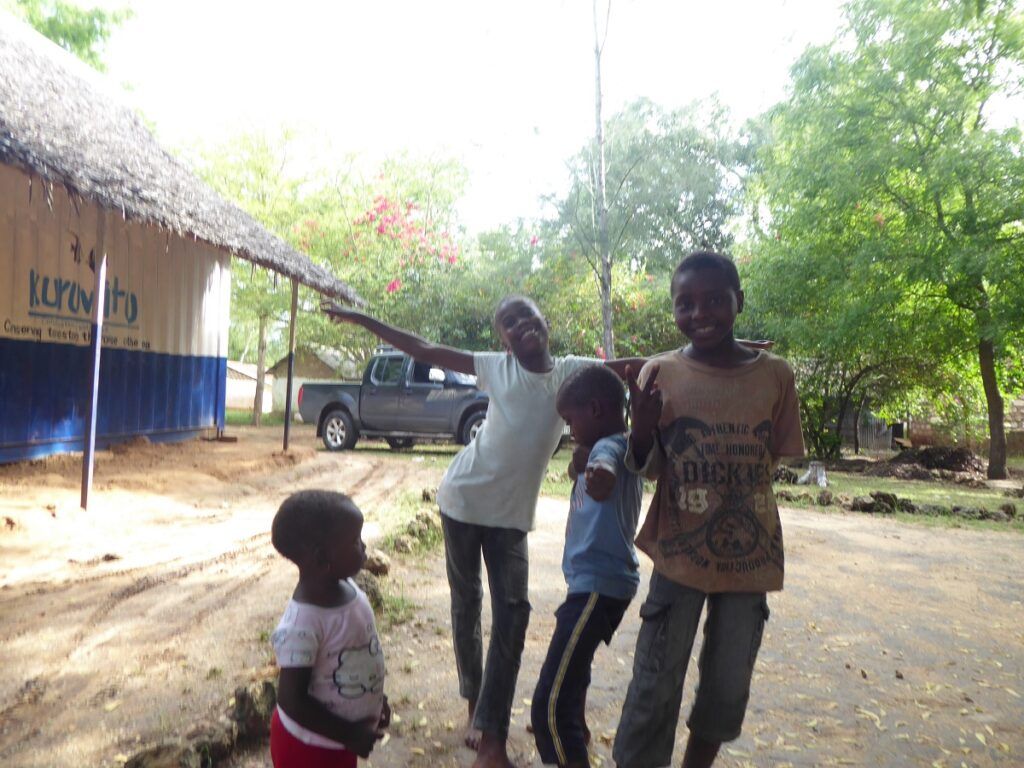
I digress, back to my visit, as we arrive at our first location, we are greeted by several young children, who recognise Jack and his car. All of them eager to say hello and assist Jack on the tour. We had entered the KCW-CBO ‘hub’, which was made up of a few buildings and two large shipping containers. Jack explained that the land was given by the community elders to KCW-CBO to do their activities. In its ‘hay day,’ there were regular classes for the youth in the area and it was used for several community activities.
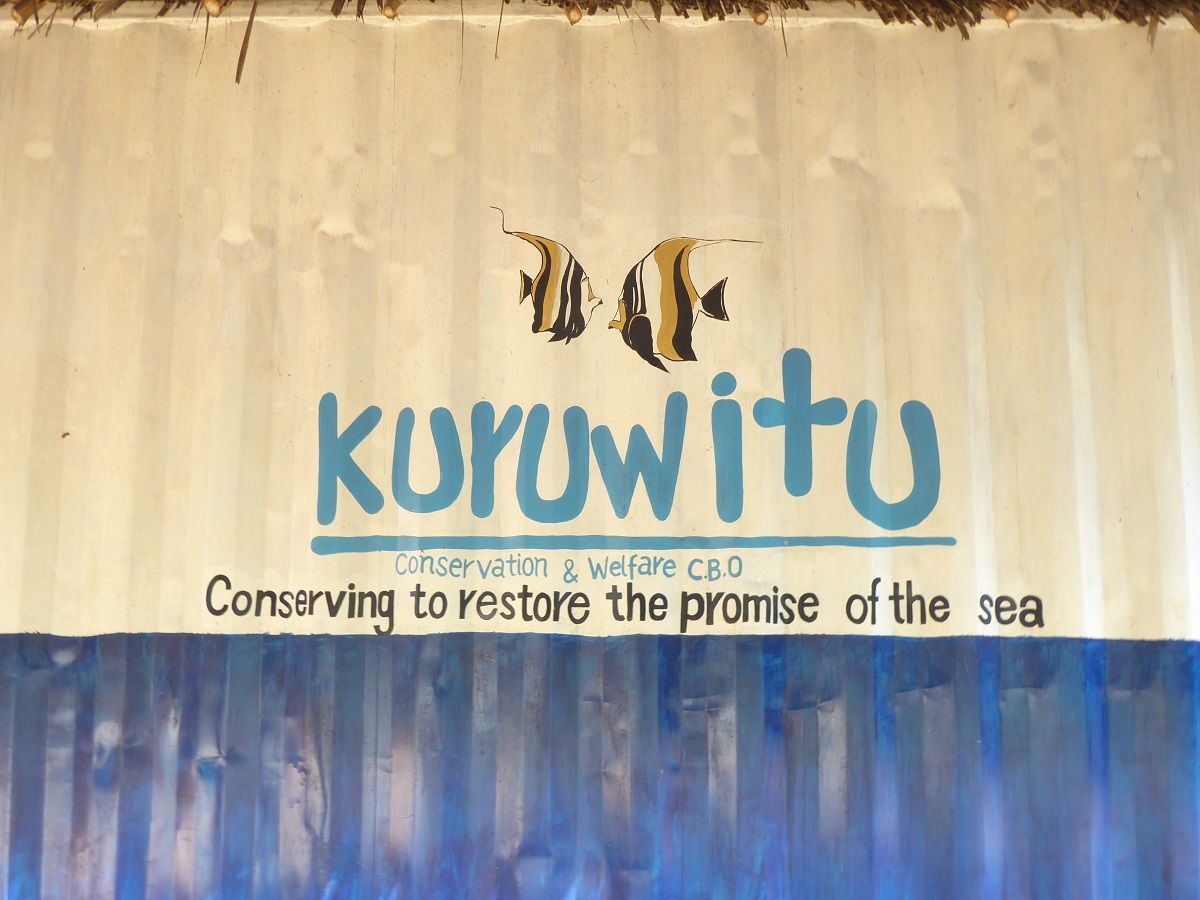
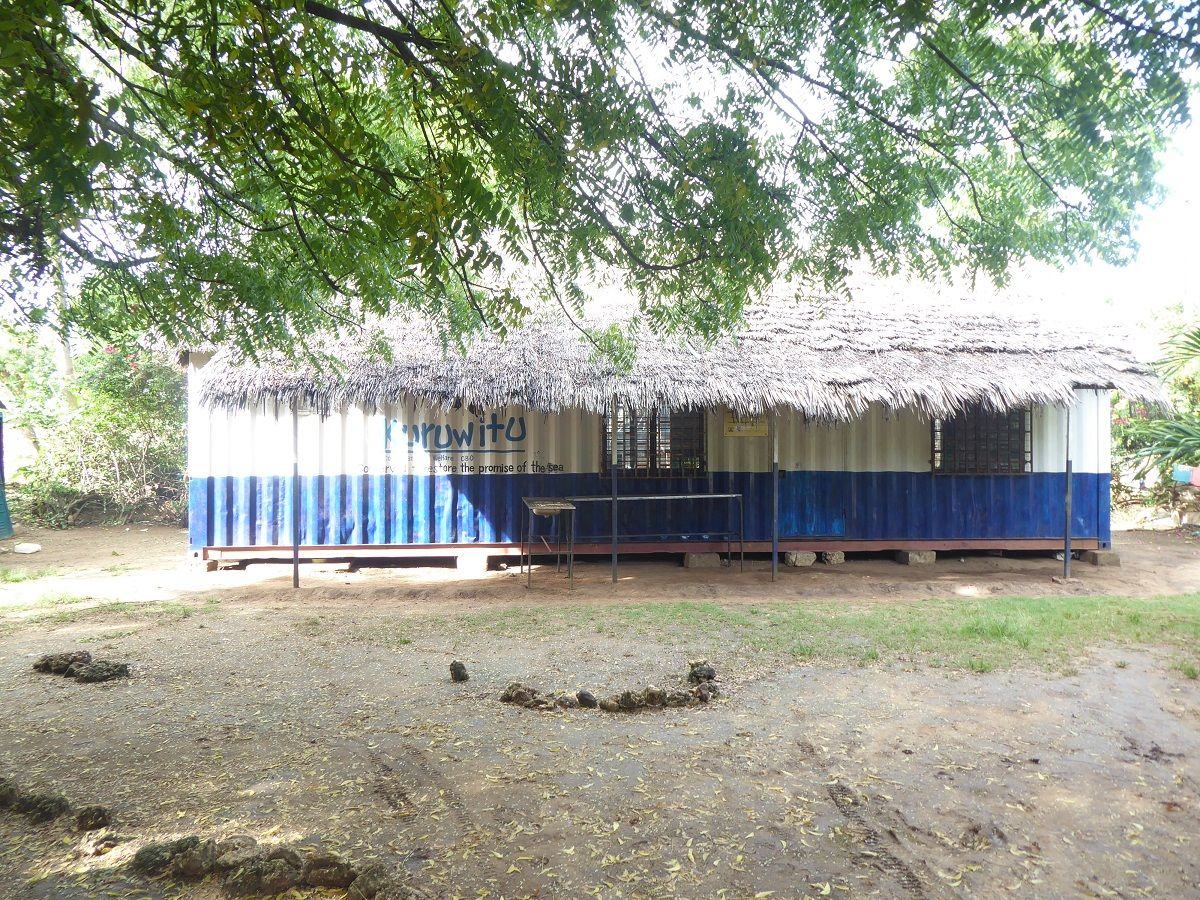
KCW-CBO is strongly supported by Oceans Alive and the Vipingo population. Residents in the area pay an annual fee to KCW-CBO for their work in marine conservation. This helps support patrols on the coast to ensure people are adhering to the rules and not taking from the no take zones. Due to COVID-19, a lot had been put on hold and the facilities were desperately needing some TLC. As we entered one of the shipping containers, now used as a store, but originally a classroom, I noticed an old schedule and stacked up chairs and tables. Jack explained how the classes were rather successful but now they just needed help getting it back up and running. It was fantastic to see such an initiative giving back to the community, not only in marine conservation, a vital source of income and livelihoods in the area but also to the community in general. As we chat the children take over as photographers and enjoy snapping away. We shortly leave, and the children chase our car as we exit. I was excited to see what we had in store next.
We continue to the Oceans Alive headquarters, we arrive at a spacious house/office. Jack explains that volunteers would normally stay at the house, but like many other projects, COVID-19 has ceased this from happening. For many organisations like Oceans Alive, volunteers are vital for the continuation of the work, helping with both manpower and finances. Jack shows me some of the projects going on at the centre, as he explains that a big effort goes into developing alternative income opportunities and livelihoods. The reason for this was that many people in the area rely on fishing based activities, but the fish populations simply cannot maintain this activity in such high numbers without some intervention. Plus, employment opportunities other than fishing or other environmentally damaging activities in the area are incredibly limited. To help restore the fish populations, so communities would have enough fish to live on would mean creating no fishing zones within these LMMAs. This would allow fish to reproduce and have ‘safe zones’ to mature.
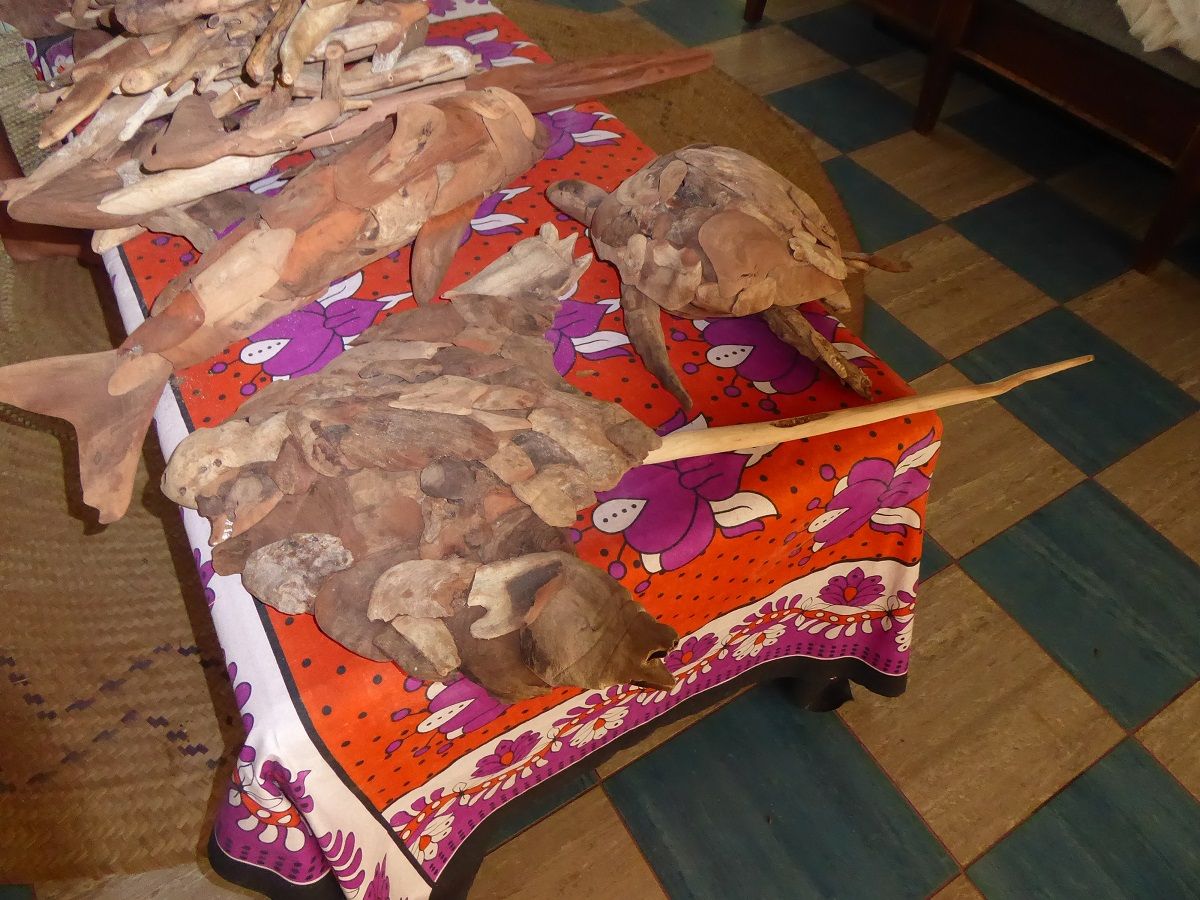
This leads me to my earlier point, education and trust. It is incredibly difficult to ask people to not fish, without first gaining their trust but also providing education on the reasons why. Over time, in most cases, communities witness the benefits, these being a return of larger fish and more stable fish populations. However, another challenge is income. How can you ask a fisherman to fish less or even stop fishing for a set period, even though in the long term it would benefit them, well the answer is, you simply cannot. Therefore, alternative livelihoods must be explored and championed, which is why Oceans Alive’s big focus is researching, testing, and funding these kinds of projects. The first one of these I was shown was the beautiful artwork from an artist in the area. As I entered the room, in front of me were several pieces of driftwood animal art, incredibly unique and I would think a very profitable venture, especially among the international community and tourists. I was informed that the artist was currently building up his itinerary, I asked that they advise me as soon as they are on sale, already having an eye on a beautiful driftwood manta ray.
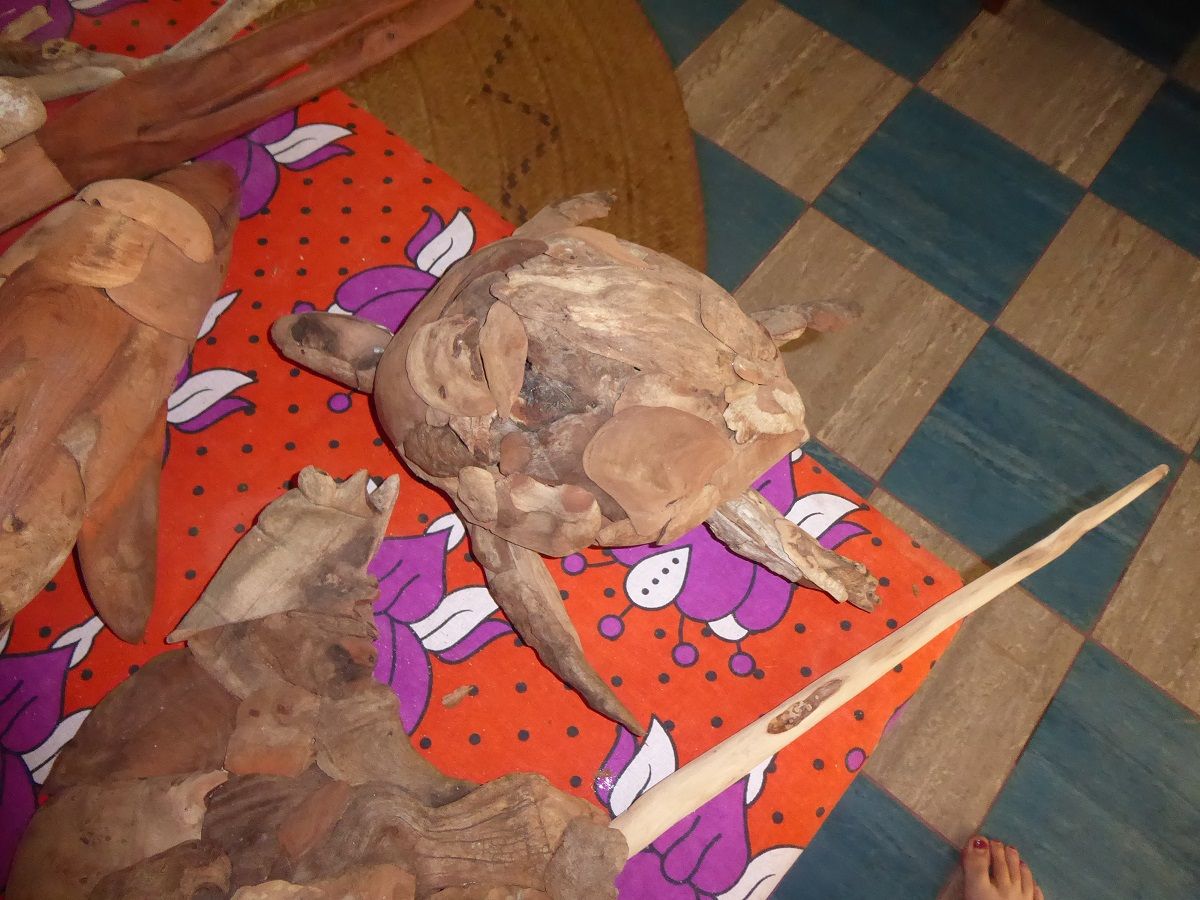
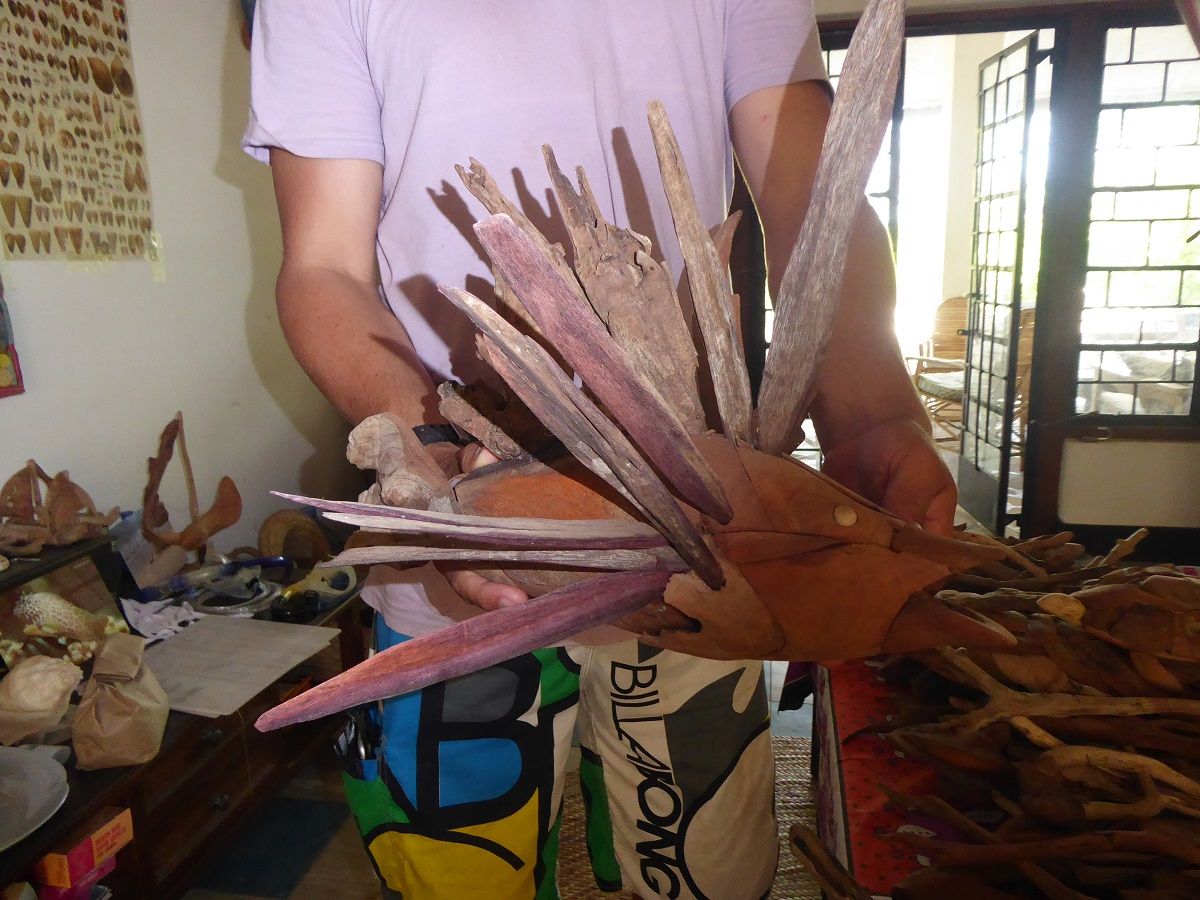
As we step outside, we walk towards the beach and Jack greets the fisherman we pass and we eventually come to a large hut. Jack explains to me that this was built for the fisherman and community to meet and use. It was evident from each place we visited Jack was popular amongst the community, another sign that Oceans Alive’s work is welcomed by the community. We head back to the car for the last leg of the tour.
Now moving inland our next stop is a small organic permaculture farm, he explains how Oceans Alive has hired staff to run both the farm and small shop. The small farm is almost a ‘test run’ for the initiative, with intentions to expand the farm and replicate, providing more job opportunities and food to the wider community. All sounds incredibly exciting and with the 17 years of hard work, it felt that things had really begun to move forward for them.
Our last visit was to check on a beehive, which was going to be donated from a nearby resident to be placed on the farm and eventually expanded. Beekeeping has repeatedly been proven to be both profitable and great for the environment. The beehive itself was very simple and made from wood, something that could easily be placed in most environments including a forest. Jack explained that their employees were a little hesitant about the addition of bees but were confident that with time and training, they would soon be on board, another great learning opportunity for all!
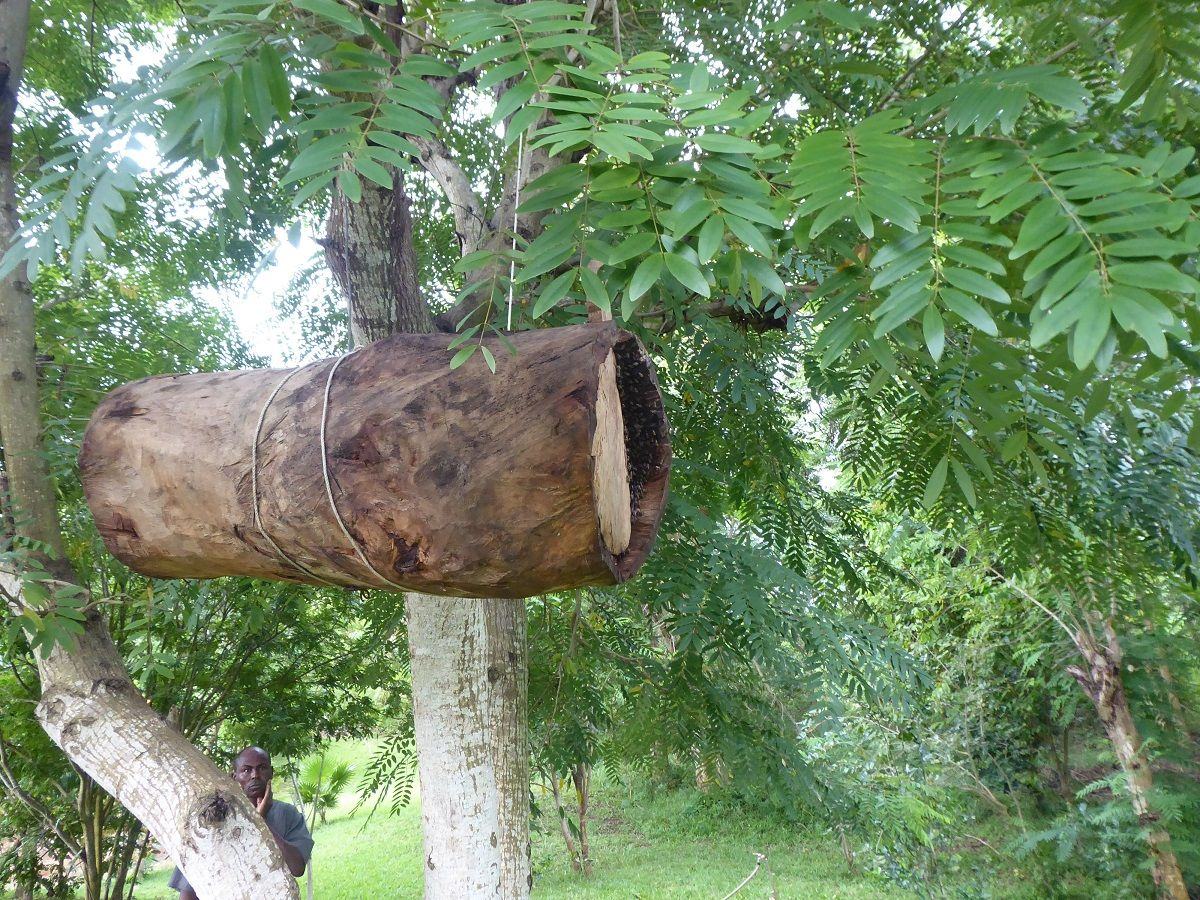
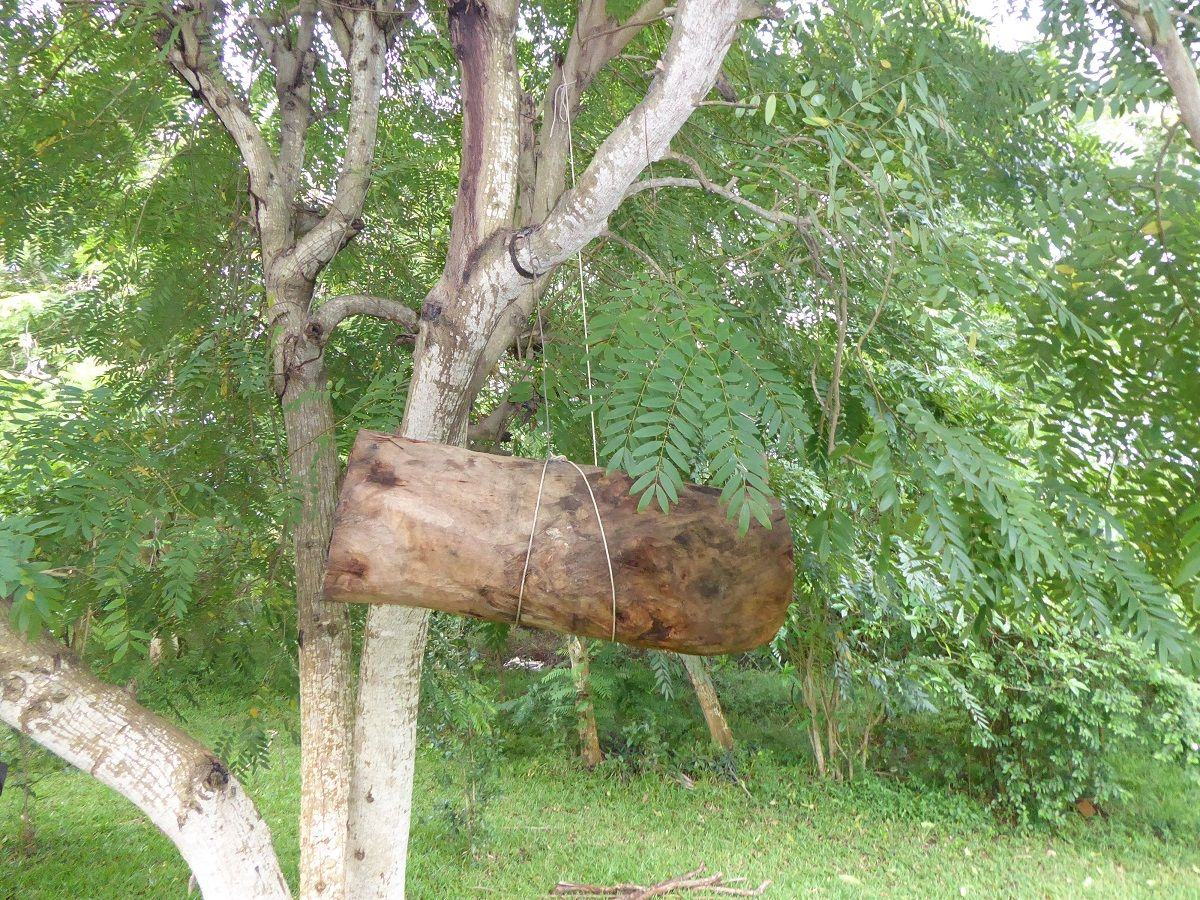
This was the end of the tour but what I had heard and witnessed gave me much to consider. It was refreshing to see both the high engagement and involvement by the community which has certainly helped put the foundations in place for a long-lasting and successful relationship all in the name of conservation. Admittedly, COVID-19 has slowed progress, but the organisation has certainly proven to be both robust and determined, proving that taking your time to build vital relationships really does pay off in the end, we all just need patience. This type of high engagement, although time consuming and not without its challenges, helps ensure that no one (or at least minimal) is left behind, that everyone is valued and considered. We can no longer make excuses, as more and more people are living with wildlife, and it is often the most vulnerable that are most impacted. We need more of this in the world and that is why Valor to Virtue looks forward to building a relationship with Oceans Alive and KCW-CBO and partnering with them to strengthen the marine conservation efforts along the Kenyan Coast!
To learn more about Oceans Alive, please visit: https://oceansalivekenya.org/